This blog contains the information or news on mining such as exploration, oil well drilling, Gold, Coal, crude oil, mining, gasoline, mining companies, mining exploration, petroleum
Showing posts with label Oil Exploration. Show all posts
Tuesday, May 12, 2009
The Spudding of Its First Well With Houston Energy L.P. (U.S. Energy Corp. Announcement)
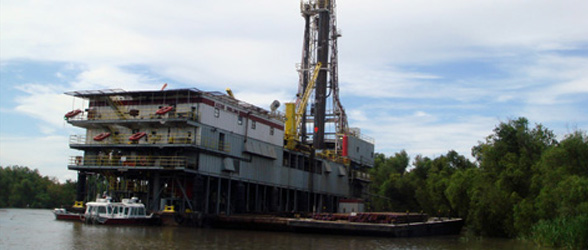
Top Mining New: Here is the mining news on oil drilling in Matagorda Country. The complete oil drilling news is as follows:
U.S. Energy Corp. announced the spudding of its first well under a previously announced Participation Agreement with Houston, Texas based Houston Energy L.P. whereby USE acquired a 10% working interest in an oil and gas prospect located in Southeast Texas. HE is the operator of the project.
The well is located in Matagorda County, TX and it is the first of up to three prospects that may be drilled on the leasehold. HE believes the first well has a resource potential of 6.6 BCF and 1,296 MBO. The well will be drilled to an initial depth of approximately 11,100 feet and USE’s commitment is approximately $216,000 to a casing point decision. Drilling is expected to be completed in 30 days after initial spud.
Under the terms of the agreement, USE is responsible for 10% of the costs to drill an initial test well (ITW) to earn an 8.5% after casing point (ACP) working interest (6.2% net revenue interest). There is also a 10% after prospect payout (APO) back-in working interest due the operator, which would reduce USE’s working interest to 7.65% (5.6% net revenue interest) APO.
“Drilling this initial test well is an important step forward in our relationship with Houston Energy and key to our strategy to increase production by leveraging the expertise of our partners,” stated Keith Larsen, CEO of U.S. Energy Corp. “Depending on the success of this well, we’ll look at additional opportunities to participate in projects with Houston Energy on a going forward basis,” he added.
Tuesday, September 2, 2008
The Discovery of Oil and Gas Well by Cheal A7
Austral Pacific Energy Ltd. announce that the Cheal A7 well commenced production on Saturday, August 30, 2008.
Austral CEO and President Thompson Jewell said, “I am pleased to see the well on stream this quickly and performing as expected. The incremental production and revenue is a welcome sight.”
A7 has now been successfully tied into the Cheal Production Facility using a temporary connection. The well will be flowed through these temporary facilities for three months while the permanent installation is being planned.
As part of the planned production and testing procedures the well is being produced at 200 barrels of oil per day (bopd) with no water during the testing phase. There was no observed surface pressure decline measured during the first test period.
The initial testing indicates that the well is capable of a maximum flow rate in the range of 250-280 bopd. The optimum flow rate will be established over the coming weeks. The field’s current production rate is approximately 520 bopd.
Cheal A3X has been shut-in this week while the A7 well was brought into production as a result of a reoccurrence of the casing leak encountered earlier this year. A number of options are being reviewed for immediate remedial repair to return the A3X well to its 90 bopd rate while planning is underway to support a permanent repair towards the end of this year if required.
A number of short and medium term production enhancement projects are being investigated and implemented to further improve and maximize the value of the current Cheal field production. Two additional locations that could add both reserves and production have been prepared and further prospects on trend are being prioritized based on the results of the A6 and A7 drilling programme.
Cheal is a producing oil and gas field south of Stratford in onshore Taranaki, New Zealand. It is 69.5% owned by Austral, which is also field operator.
Austral Pacific is a listed independent oil and gas exploration and production company registered in Canada with corporate headquarters in Wellington, New Zealand. The Company has an interest in eight exploration and production permits totaling over 2.6 million acres in New Zealand. The Company’s primary assets are the Cheal Field, Kahili Field and Cardiff Field located onshore in the highly prolific Taranaki Basin on the North Island of New Zealand.
Austral CEO and President Thompson Jewell said, “I am pleased to see the well on stream this quickly and performing as expected. The incremental production and revenue is a welcome sight.”
A7 has now been successfully tied into the Cheal Production Facility using a temporary connection. The well will be flowed through these temporary facilities for three months while the permanent installation is being planned.
As part of the planned production and testing procedures the well is being produced at 200 barrels of oil per day (bopd) with no water during the testing phase. There was no observed surface pressure decline measured during the first test period.
The initial testing indicates that the well is capable of a maximum flow rate in the range of 250-280 bopd. The optimum flow rate will be established over the coming weeks. The field’s current production rate is approximately 520 bopd.
Cheal A3X has been shut-in this week while the A7 well was brought into production as a result of a reoccurrence of the casing leak encountered earlier this year. A number of options are being reviewed for immediate remedial repair to return the A3X well to its 90 bopd rate while planning is underway to support a permanent repair towards the end of this year if required.
A number of short and medium term production enhancement projects are being investigated and implemented to further improve and maximize the value of the current Cheal field production. Two additional locations that could add both reserves and production have been prepared and further prospects on trend are being prioritized based on the results of the A6 and A7 drilling programme.
Cheal is a producing oil and gas field south of Stratford in onshore Taranaki, New Zealand. It is 69.5% owned by Austral, which is also field operator.
Austral Pacific is a listed independent oil and gas exploration and production company registered in Canada with corporate headquarters in Wellington, New Zealand. The Company has an interest in eight exploration and production permits totaling over 2.6 million acres in New Zealand. The Company’s primary assets are the Cheal Field, Kahili Field and Cardiff Field located onshore in the highly prolific Taranaki Basin on the North Island of New Zealand.
Friday, August 22, 2008
Russian oil tycoon's parole bid rejected
By CATRINA STEWART, Associated Press Writer
CHITA, Russia - A Russian court on Friday rejected jailed oil tycoon Mikhail Khodorkovsky's request for early release from an eight-year sentence for tax evasion and fraud. Khodorkovsky's lawyer called the decision politically motivated and said he would appeal.
Judge Igor Falileyev said Khodorkovsky was ineligible for parole because he had refused to undertake professional training at his prison, which specializes in sewing, and because of an incident in which he flouted prison rules.
Khodorkovsky appeared calm as the decision was announced at a court in the Siberian city of Chita, reacting only with a small shake of his head.
"The judicial system won't be reformed any time soon," he said, as he was hustled out of the court by guards.
Khodorkovsky — who headed the Yukos oil company and was once Russia's richest man — has spent almost five years in jail. He was sentenced in 2005 to an eight-year term and has been eligible for parole for the past 10 months.
His parole hearing had been seen as a test of new President Dmitry Medvedev's commitment to reforming Russia's judiciary.
The prosecution of the oligarch was widely viewed as an attempt to silence a Kremlin opponent and consolidate control over Russia's strategic energy sector. The charges and subsequent demand for huge back taxes led to the effective renationalization of Yukos, which was taken over by the state oil company Rosneft.
Khodorkovsky's lawyer, Vadim Klyuvgant, said the decision was handed down "by a court that is not free and is heavily influenced by those who are simply scared of freeing Mikhail Khodorkovsky." He said Khodorkovsky would be eligible to file another parole request in six months.
Khodorkovsky also faces new charges of embezzlement and money laundering, brought in June against both the former billionaire and his business associate Platon Lebedev.
Khodorkovsky said Thursday that, if released, he would not return to the oil industry but would devote himself to his family and humanitarian work.
___
Associated Press Writer Maria Danilova contributed to this report from Moscow.
Source:news.yahoo.com
CHITA, Russia - A Russian court on Friday rejected jailed oil tycoon Mikhail Khodorkovsky's request for early release from an eight-year sentence for tax evasion and fraud. Khodorkovsky's lawyer called the decision politically motivated and said he would appeal.
Judge Igor Falileyev said Khodorkovsky was ineligible for parole because he had refused to undertake professional training at his prison, which specializes in sewing, and because of an incident in which he flouted prison rules.
Khodorkovsky appeared calm as the decision was announced at a court in the Siberian city of Chita, reacting only with a small shake of his head.
"The judicial system won't be reformed any time soon," he said, as he was hustled out of the court by guards.
Khodorkovsky — who headed the Yukos oil company and was once Russia's richest man — has spent almost five years in jail. He was sentenced in 2005 to an eight-year term and has been eligible for parole for the past 10 months.
His parole hearing had been seen as a test of new President Dmitry Medvedev's commitment to reforming Russia's judiciary.
The prosecution of the oligarch was widely viewed as an attempt to silence a Kremlin opponent and consolidate control over Russia's strategic energy sector. The charges and subsequent demand for huge back taxes led to the effective renationalization of Yukos, which was taken over by the state oil company Rosneft.
Khodorkovsky's lawyer, Vadim Klyuvgant, said the decision was handed down "by a court that is not free and is heavily influenced by those who are simply scared of freeing Mikhail Khodorkovsky." He said Khodorkovsky would be eligible to file another parole request in six months.
Khodorkovsky also faces new charges of embezzlement and money laundering, brought in June against both the former billionaire and his business associate Platon Lebedev.
Khodorkovsky said Thursday that, if released, he would not return to the oil industry but would devote himself to his family and humanitarian work.
___
Associated Press Writer Maria Danilova contributed to this report from Moscow.
Source:news.yahoo.com
Friday, August 8, 2008
History of Oil Well Drilling
This giant book contains almost 1,500 pages and covers well drilling from prehistoric times to 1971, which is the book's publication date. It is divided into two parts; part one covers drilling methods and part two covers drilling equipment. While a definitive work on drilling history, it is not without fault. It was not edited well (if at all) for it is has many grammatical errors and inconsistencies. Moreover, it seems to rely more on anecdotes and heresay rather than solid historical research. It is, however, well illustrated, even if some of the drawings and photos are reproduced poorly. Although the book has faults, I nevertheless highly recommend it for anyone who wants to know about drilling history. "History of Oil Well Drilling" will likely tell you more than you'll ever want to know.
Thursday, August 7, 2008
Top Mining News-Oil prices could drop if Iran concerns allayed: OPEC
This news on oil price was released on Sat Jul 26, 11:33 AM ET.
ALGIERS (AFP) - The price of oil could drop to between 70 and 80 dollars a barrel if the dollar strengthens and concerns over Iran are reduced, OPEC chief Chakib Khelil said Saturday.
“If the dollar strengthens and if the crisis with Iran is resolved, the trend in oil prices should be to go towards 70 to 80 dollars,” the head of the Organization of Petroleum Exporting Countries said on the sidelines of a conference.
Khelil is also Algeria’s Energy Minister.
Oil prices ended the week at around 125 dollars a barrel in London and New York. Crude oil prices have dropped by nearly 25 dollars on both sides of the Atlantic in less than two weeks.
ALGIERS (AFP) - The price of oil could drop to between 70 and 80 dollars a barrel if the dollar strengthens and concerns over Iran are reduced, OPEC chief Chakib Khelil said Saturday.
“If the dollar strengthens and if the crisis with Iran is resolved, the trend in oil prices should be to go towards 70 to 80 dollars,” the head of the Organization of Petroleum Exporting Countries said on the sidelines of a conference.
Khelil is also Algeria’s Energy Minister.
Oil prices ended the week at around 125 dollars a barrel in London and New York. Crude oil prices have dropped by nearly 25 dollars on both sides of the Atlantic in less than two weeks.
Mining News-Dems try to spur oil exploration on available land
This news on oil exploration was released by ANDREW TAYLOR on Thu Jul 17, 3:36 PM ET.
WASHINGTON - House Republicans on Thursday killed a Democratic plan designed to spur drilling on already available federal lands in Alaska, the West and the western Gulf of Mexico.
ADVERTISEMENT
Republicans scoffed that the Drill Act — imposing a tougher “use it or lose it” rule on leases already held by oil companies — would do little to boost exploration. They renewed their demand to open up the Atlantic and Pacific coasts and the eastern Gulf of Mexico to exploration.
The bill won a 244-173 majority, but still failed because it did not get a two-thirds margin under rules requiring a supermajority vote. Democratic leaders appeared to choose the unusual process because it allowed them to deny Republicans a vote on opening up new offshore areas for drilling.
Democrats pointed out that any new offshore leasing — sought by the administration, most Republicans and some Democrats — would not produce oil for a decade or so and therefore would not effect today’s $4-plus per gallon gasoline prices.
But with voters so angry over gas prices, Democrats felt the need to burnish their pro-drilling credentials in the face of unrelenting GOP pressure to open up the Outer Continental Shelf to oil exploration.
“Drill. Drill. Drill,” said Rep. Nick Rahall, D-W.Va., the chairman of the House Natural Resources Committee. “Drill here. Drill now.”
Democrats again called on President Bush to release some oil from the Strategic Petroleum Reserve in an attempt to immediately drive down prices.
As debate began, the White House weighed in with a veto threat. It said a Democratic provision requiring oil and gas companies to develop on already leased lands before obtaining new leases would curb future U.S. production.
“By blocking some firms from competing for new leases, this legislation would further increase gasoline prices that already exceed $4 per gallon,” the White House said in a statement.
On the eve of the vote, the Interior Department issued a major new lease in Alaska’s National Petroleum Reserve. The Democratic bill would require a more active department leasing program on the reserve, which is to the west of the off-limits Arctic National Wildlife Reserve. The reserve is the subject of a long-standing battle between environmentalists and the oil lobby.
With the rise in pump prices, public opinion on energy issues is shifting in favor of a more permissive stance on drilling, even though the idea of opening the Atlantic and Pacific coasts or the eastern Gulf off Florida’s beaches to oil and gas companies long has been seen as a nonstarter.
Democrats are scrambling to appear pro-drilling — hence the “Drill Act” title for Thursday’s bill — even as leaders such as House Speaker Nancy Pelosi, D-Calif., are dead set against reversing the drilling bans.
Democrats say the industry should first go after oil and natural gas on 68 million acres already leased.
Democrats also say Republicans are simply seeking political advantage with a pro-drilling plan that won’t deliver new U.S. oil for another decade or so, and that the GOP’s fixation on drilling is a smoke screen for the administration’s inability to prevent the sharp spike in gasoline prices.
Bush this week lifted an executive prohibition on drilling for oil and gas on the Outer Continental Shelf. He acknowledged that getting any oil to market would take a lot of time. An annual ban by Congress remains in place.
“By his own admission yesterday, the president said this is not going to have an immediate impact,” Pelosi told reporters Thursday.
In the Senate, Majority Leader Harry Reid, D-Nev., moved to begin debate on a bill aimed at curbing speculation in the oil markets that Democrats say has contributed to the rapid rise in the price of oil.
The bill would increase staffing at the Commodity Futures Trading Commission and require the agency to curb the size of speculative positions held by traders who aren’t using the markets for legitimate hedging purposes.
Republicans hope to use the bill as a vehicle for votes on further offshore exploration, among other pro-energy production measures.
WASHINGTON - House Republicans on Thursday killed a Democratic plan designed to spur drilling on already available federal lands in Alaska, the West and the western Gulf of Mexico.
ADVERTISEMENT
Republicans scoffed that the Drill Act — imposing a tougher “use it or lose it” rule on leases already held by oil companies — would do little to boost exploration. They renewed their demand to open up the Atlantic and Pacific coasts and the eastern Gulf of Mexico to exploration.
The bill won a 244-173 majority, but still failed because it did not get a two-thirds margin under rules requiring a supermajority vote. Democratic leaders appeared to choose the unusual process because it allowed them to deny Republicans a vote on opening up new offshore areas for drilling.
Democrats pointed out that any new offshore leasing — sought by the administration, most Republicans and some Democrats — would not produce oil for a decade or so and therefore would not effect today’s $4-plus per gallon gasoline prices.
But with voters so angry over gas prices, Democrats felt the need to burnish their pro-drilling credentials in the face of unrelenting GOP pressure to open up the Outer Continental Shelf to oil exploration.
“Drill. Drill. Drill,” said Rep. Nick Rahall, D-W.Va., the chairman of the House Natural Resources Committee. “Drill here. Drill now.”
Democrats again called on President Bush to release some oil from the Strategic Petroleum Reserve in an attempt to immediately drive down prices.
As debate began, the White House weighed in with a veto threat. It said a Democratic provision requiring oil and gas companies to develop on already leased lands before obtaining new leases would curb future U.S. production.
“By blocking some firms from competing for new leases, this legislation would further increase gasoline prices that already exceed $4 per gallon,” the White House said in a statement.
On the eve of the vote, the Interior Department issued a major new lease in Alaska’s National Petroleum Reserve. The Democratic bill would require a more active department leasing program on the reserve, which is to the west of the off-limits Arctic National Wildlife Reserve. The reserve is the subject of a long-standing battle between environmentalists and the oil lobby.
With the rise in pump prices, public opinion on energy issues is shifting in favor of a more permissive stance on drilling, even though the idea of opening the Atlantic and Pacific coasts or the eastern Gulf off Florida’s beaches to oil and gas companies long has been seen as a nonstarter.
Democrats are scrambling to appear pro-drilling — hence the “Drill Act” title for Thursday’s bill — even as leaders such as House Speaker Nancy Pelosi, D-Calif., are dead set against reversing the drilling bans.
Democrats say the industry should first go after oil and natural gas on 68 million acres already leased.
Democrats also say Republicans are simply seeking political advantage with a pro-drilling plan that won’t deliver new U.S. oil for another decade or so, and that the GOP’s fixation on drilling is a smoke screen for the administration’s inability to prevent the sharp spike in gasoline prices.
Bush this week lifted an executive prohibition on drilling for oil and gas on the Outer Continental Shelf. He acknowledged that getting any oil to market would take a lot of time. An annual ban by Congress remains in place.
“By his own admission yesterday, the president said this is not going to have an immediate impact,” Pelosi told reporters Thursday.
In the Senate, Majority Leader Harry Reid, D-Nev., moved to begin debate on a bill aimed at curbing speculation in the oil markets that Democrats say has contributed to the rapid rise in the price of oil.
The bill would increase staffing at the Commodity Futures Trading Commission and require the agency to curb the size of speculative positions held by traders who aren’t using the markets for legitimate hedging purposes.
Republicans hope to use the bill as a vehicle for votes on further offshore exploration, among other pro-energy production measures.
Wednesday, August 6, 2008
MINING NEWS-ALTMIRE MISSES THE POINT ON OIL EXPLORATIONBy Politicker Staff
This news on Oil Exploration was released on Jun 19 2008.
Cranberry Township, PA – This has been yet another week of inaction on the part of Jason Altmire. Altmire is merely regurgitating the talking points given to him by his party leaders and he fails to understand the need to domestically address our petroleum supply problems or anything about the process of drilling for our own supply.
Altmire recently stated on a KDKA Radio interview:
“Oil and gas companies already hold leases on 68 million acres of federal land that they are not producing on. They hold the leases, they could drill at any point, and they are choosing not to do it…”
“Altmire fails to understand that it takes time - sometimes years - to do the mapping, testing, and construction to get to the point where drilling begins. During that time, the land would be considered ‘not in production’ but that doesn’t mean there is not an attempt being made to obtain oil and natural gas. Additionally, the fact that a company holds a lease is not an indicator that exploration on that land will yield oil and gas,” said Melissa Hart.
According to the U.S. Energy Information Administration, between 2002 and 2007 52% of all the exploration wells and 8% of the development wells were dry.
Hart added, “to meet the supply demands, more exploration is needed and a vast majority of Americans support it. All we have heard from Altmire is ‘no’ to every proposal put forth that could increase supply and offer some price relief.”
A new poll was released this week by Rasmussen Reports that showed 67% of Americans believe that we should drill off the coasts of California, Florida and other states.
“It is disappointing how our land and coastal waters continue to be restricted from oil and gas development by the government. Currently exploration is prohibited on 97% of the United States outer continental shelf and 94% of federal land managed by the Bureau of Land Management. It is outrageous, especially now as we are so dependent on even unfriendly foreign sources, that our own representative won’t allow us to explore these untapped resources here at home. As a result, we will continue to pay through the nose for gas and have much less control over our economic destiny,” Hart added.
She stressed that she is working to go back to Congress to “vote as before: to develop our resources here, which in turn develops our strength.” Hart asks: “Will Altmire ever get the message that people here in Western Pennsylvania are suffering financially? We need solutions – not a naysayer.”
Cranberry Township, PA – This has been yet another week of inaction on the part of Jason Altmire. Altmire is merely regurgitating the talking points given to him by his party leaders and he fails to understand the need to domestically address our petroleum supply problems or anything about the process of drilling for our own supply.
Altmire recently stated on a KDKA Radio interview:
“Oil and gas companies already hold leases on 68 million acres of federal land that they are not producing on. They hold the leases, they could drill at any point, and they are choosing not to do it…”
“Altmire fails to understand that it takes time - sometimes years - to do the mapping, testing, and construction to get to the point where drilling begins. During that time, the land would be considered ‘not in production’ but that doesn’t mean there is not an attempt being made to obtain oil and natural gas. Additionally, the fact that a company holds a lease is not an indicator that exploration on that land will yield oil and gas,” said Melissa Hart.
According to the U.S. Energy Information Administration, between 2002 and 2007 52% of all the exploration wells and 8% of the development wells were dry.
Hart added, “to meet the supply demands, more exploration is needed and a vast majority of Americans support it. All we have heard from Altmire is ‘no’ to every proposal put forth that could increase supply and offer some price relief.”
A new poll was released this week by Rasmussen Reports that showed 67% of Americans believe that we should drill off the coasts of California, Florida and other states.
“It is disappointing how our land and coastal waters continue to be restricted from oil and gas development by the government. Currently exploration is prohibited on 97% of the United States outer continental shelf and 94% of federal land managed by the Bureau of Land Management. It is outrageous, especially now as we are so dependent on even unfriendly foreign sources, that our own representative won’t allow us to explore these untapped resources here at home. As a result, we will continue to pay through the nose for gas and have much less control over our economic destiny,” Hart added.
She stressed that she is working to go back to Congress to “vote as before: to develop our resources here, which in turn develops our strength.” Hart asks: “Will Altmire ever get the message that people here in Western Pennsylvania are suffering financially? We need solutions – not a naysayer.”
Labels:
Mining Exploration,
mining news,
Oil,
Oil Exploration
Subscribe to:
Posts (Atom)
